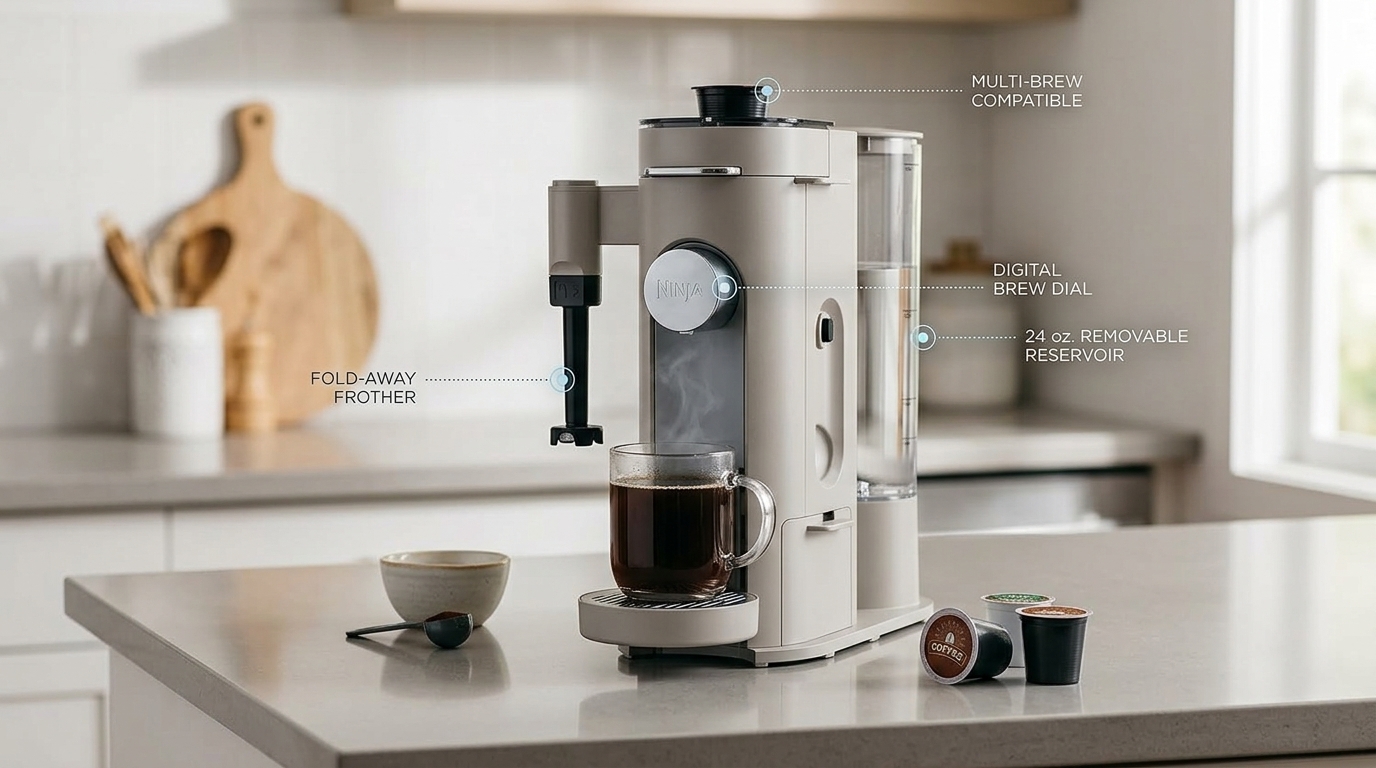
Anyone who has stood in front of a kitchen counter crowded with appliances knows the tension. You want a decent cup of coffee without a lot of fuss, but you also don’t want to be locked into one way of making it. Pods are quick but can feel limiting. Ground coffee offers more variety but usually asks for more cleanup and a bigger machine.
The Ninja Single Serve Coffee Maker in Stone (model PB051ST) sits in the space between those two approaches. It accepts both K-Cup style pods and ordinary ground coffee, offers several brew styles, and pairs that with a sizable water tank. This article walks through what the machine does, how it might fit into different routines, and what’s worth weighing before you decide whether it suits your kitchen.
Specifications and availability can change, so treat the details below as a general guide and confirm the current information on the product page.
What This Machine Is Designed to Do
At its core, this is a single-serve brewer: it makes one cup at a time rather than a full carafe. What sets it apart from many pod-only machines is that it’s built as a combination unit. You can use a K-Cup compatible pod when speed matters, or switch to scooped grounds when you’d rather use a bag of beans from a local roaster or a favorite store-bought blend.
The “Stone” in the name refers to the color, a light neutral that tends to blend in with many kitchen palettes. It’s a minor detail, but appearance does matter when an appliance lives on the counter every day.
Key Features
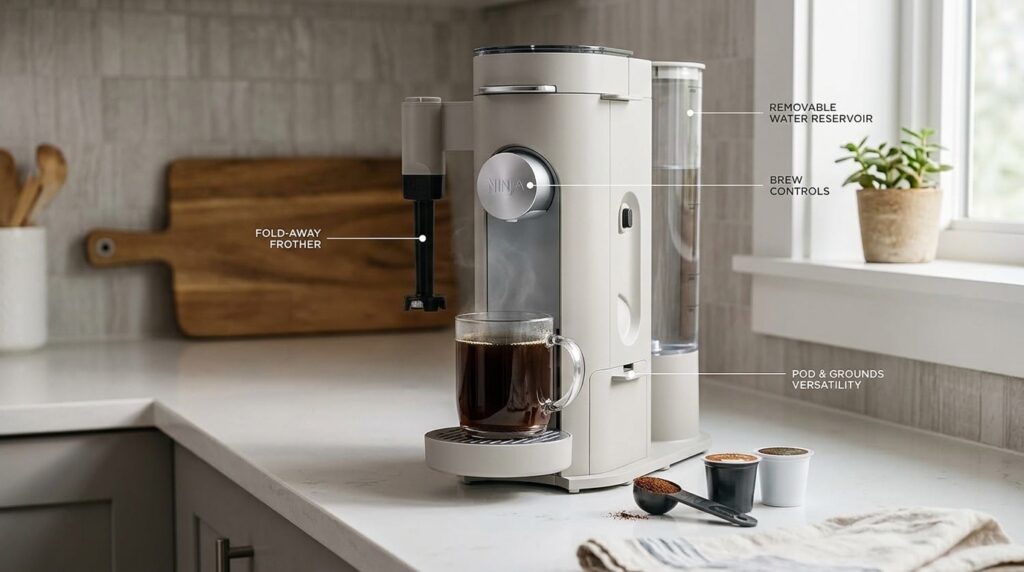
Two Ways to Brew: Pods and Grounds
The most defining characteristic is flexibility. A pod-based routine works well on rushed mornings, while grounds give you control over the coffee itself, including the roast, the grind, and the amount used. Having both options in one machine means a household doesn’t have to choose a single philosophy.
For households with mixed preferences, this can be practical. One person might grab a pod on the way out the door, while another takes a few extra minutes to measure out a favorite roast.
Four Brew Styles
The machine offers four brewing styles. Based on the manufacturer’s general description, these typically cover a standard cup, a stronger “rich” style, an over-ice option for cold drinks, and a concentrated style often used as a base for milk-based drinks. The exact naming and behavior are best confirmed in the product’s official documentation, but the idea is clear: rather than producing one uniform cup, the brewer lets you shift the character of the drink.
This matters more than it might seem. The same coffee brewed for a hot mug and for pouring over ice often calls for different strength, since melting ice dilutes the drink.
Multiple Cup Sizes, Up to 24 Ounces
The brewer supports a range of sizes, topping out at 24 ounces. Smaller sizes suit a quick espresso-style shot or a modest morning cup, while the larger end is closer to a travel tumbler or a generous mug. If you tend to fill a large insulated cup before leaving the house, a bigger maximum size can reduce the need for a second brew.
A 56-Ounce Removable Reservoir
Water capacity is a quiet but meaningful feature. A larger reservoir means fewer refills, and because it’s removable, filling it at the sink is easier than pouring from a pitcher into a fixed tank. At 56 ounces, it can cover multiple cups before it needs attention, which is helpful in a household where several people use the machine through the morning.
Compact, Counter-Friendly Footprint
Single-serve machines generally take up less space than a full drip brewer with a carafe and warming plate. Exact dimensions vary by model, so measuring your space, especially the clearance beneath cabinets for the lid and reservoir, is a sensible step.
How It Can Be Used
Everyday Hot Coffee
The most obvious use is the simplest: a hot cup in the morning. With pods, the process is minimal. With grounds, you add your coffee to the basket, choose a size and style, and start the brew.
Iced Coffee Without the Extra Steps
Iced coffee often goes wrong in one of two ways. Either hot coffee is poured over ice and ends up watery, or it’s brewed ahead of time and chilled for hours. A dedicated over-ice style is meant to address this by brewing a more concentrated drink that holds up when it meets ice. For warmer months, that can be a convenient shortcut.
A Base for Milk-Based Drinks
The concentrated style can serve as a starting point for lattes and similar drinks. It isn’t the same as espresso made under high pressure, and the manufacturer’s own descriptions are worth reading closely on that point, but a strong, small-volume brew paired with steamed or frothed milk can produce something in the same spirit. Some households add a separate handheld frother to round things out.
Experimenting With Different Coffees
Because grounds are an option, the machine can double as a way to explore. You might try a medium roast one week and a darker, bolder blend the next, or work through sample bags from different roasters. This is difficult with pods alone, where the selection is limited to what’s packaged in that format.
Guests and Gatherings
A single-serve brewer can be useful when guests have different tastes. Rather than brewing a full pot that half the table won’t drink, each person gets a cup made to their preference, including decaf for those who want it.
Who It May Be Suitable For
No appliance fits everyone, but certain situations tend to line up well with this type of machine.
Households with differing preferences. If one person likes convenience pods and another prefers ground coffee, a combination unit avoids the need for two machines.
People who drink coffee at different times. When nobody is brewing for a crowd, single-serve makes sense. Each cup is fresh, and nothing sits on a warming plate losing its flavor.
Iced coffee drinkers. Anyone who leans toward cold drinks may appreciate having a brew style designed for that purpose.
Small kitchens, dorms, and offices. A single-serve unit with a good-sized reservoir can be a reasonable fit where counter space is limited and a full-size brewer would feel excessive. It’s worth checking any rules about appliances if it’s for a shared or institutional space.
Pod users curious about grounds. If you’ve been using pods and wonder about making your own coffee, a machine that handles both can serve as a gentle transition without abandoning what you already own.
Important Things to Consider
A balanced look includes the trade-offs, not just the features.
Single-Serve Has Limits
If you regularly serve six or eight people at once, a single-serve machine will feel slow, since each cup is brewed individually. For large gatherings, a carafe-style brewer or batch brewer may be more efficient.
Pods Carry an Ongoing Cost and Waste Consideration
Pods are convenient, but they generate packaging waste and tend to cost more per cup than buying bulk grounds. Some people choose reusable filters or recyclable pod options where available. If sustainability or budget is a priority, using grounds more often than pods can help. Check the manufacturer’s guidance on compatible pods and reusable accessories.
Brew Strength Isn’t the Same as Espresso
Descriptions of concentrated brewing can sound like espresso, but home single-serve machines generally don’t use the same pressure as dedicated espresso equipment. If espresso itself is the goal, it’s worth understanding the difference before choosing.
Cleaning and Maintenance Matter
Any coffee machine benefits from regular care. Rinsing removable parts, emptying used grounds, and descaling periodically according to the manufacturer’s instructions help preserve performance and taste. Hard water areas may call for more frequent descaling. A removable reservoir makes cleaning easier, but it’s still a task to build into your routine.
Using Grounds Takes a Little More Effort
The flexibility of grounds comes with a few extra steps: measuring, filling the basket, and disposing of used coffee afterward. That’s a small trade for many people, but anyone who wants absolute minimal effort every morning may find themselves reaching for pods anyway.
Check Compatibility Details
Before relying on any specific accessory, pod type, or cup size, confirm compatibility with the manufacturer’s documentation. Travel mugs vary in height, so if you plan to brew directly into one, measure it against the machine’s clearance.
Comparing General Categories of Coffee Makers
It can help to see where a combination single-serve machine sits among other common types of brewers. None of these is inherently better; each suits a different set of priorities.
Pod-only single-serve machines are typically the simplest and quickest. They tend to be compact and require very little learning, but they limit you to the pods that fit.
Combination pod-and-grounds machines, the category this model belongs to, add flexibility. The trade-off is slightly more to learn and, in some cases, a bit more to clean.
Traditional drip coffee makers brew a full pot, which suits groups and households that drink coffee steadily through the morning. They’re less convenient when only one cup is needed.
Pour-over and manual methods give the user the most control over every variable and are valued by people who enjoy the ritual. They take more time and attention, which isn’t always welcome on a busy day.
Espresso machines produce a different style of drink altogether, with higher pressure and a more concentrated result. They generally cost more in money, space, and effort, and they have a steeper learning curve.
French press and similar immersion brewers are low-tech and produce a full-bodied cup, though cleanup involves handling wet grounds.
Thinking about your own habits, such as how many cups you make, how much time you have, and how much you enjoy the process, usually points toward the category that fits.
Tips for Getting More From a Combination Brewer
A few general practices apply to most machines in this class:
- Use fresh, cold water. Water makes up nearly all of the drink, so its quality shows up in the cup.
- Grind size matters. For ground coffee in a machine like this, a medium grind is a common starting point. Very fine grinds can clog baskets, while very coarse grinds may taste weak.
- Adjust the amount to taste. If a cup tastes thin, slightly more coffee or a stronger brew style may help. If it’s bitter, try less or a different roast.
- Store coffee properly. Keep beans or grounds in an airtight container away from heat and light.
- Pre-warm your mug on cold mornings if you like your coffee hot for longer.
- Experiment in small steps. Change one variable at a time so you can tell what made the difference.
Frequently Asked Questions
Can this machine use both pods and ground coffee?
Yes, it’s described as a combination machine that works with K-Cup style pods as well as ground coffee. Check the instructions for how to set up each option.
What brew sizes does it offer?
It offers several sizes, with the largest reaching 24 ounces. Specific size options are listed in the product details.
How large is the water reservoir?
The reservoir holds 56 ounces and is removable, which makes refilling and cleaning more straightforward.
Does it make iced coffee?
It includes a brew style intended for drinks served over ice. The result depends on the coffee used and how much ice you add.
Is it the same as an espresso machine?
No. It can brew a concentrated style that works as a base for milk drinks, but it isn’t the same as equipment built to produce true espresso.
Do I need special filters for grounds?
Requirements vary by model, so check the user guide to see what the machine includes and whether any additional filter is recommended.
How often should it be descaled?
That depends on your water hardness and how often you brew. The manufacturer’s care instructions give the recommended schedule.
Is it suitable for an office or dorm?
Its single-serve design and reservoir size make it a plausible option, though you should confirm any rules about personal appliances in shared spaces.
Where can I find the manual and warranty details?
The manufacturer’s website and the product page are the most reliable places for current manuals, warranty terms, and support information.
Final Thoughts
The Ninja PB051ST is a flexible single-serve brewer built around the idea that people don’t always want to drink coffee the same way. Pods for speed, grounds for variety, multiple brew styles, a range of cup sizes, and a sizable removable reservoir are all aimed at making one machine cover several situations.
Whether that’s the right fit comes down to habits and priorities. Large households that brew for groups may prefer a different style of machine. People who want true espresso will want to look at dedicated equipment. But for someone who wants a compact, adaptable option for everyday cups, hot or iced, it’s a category worth understanding.