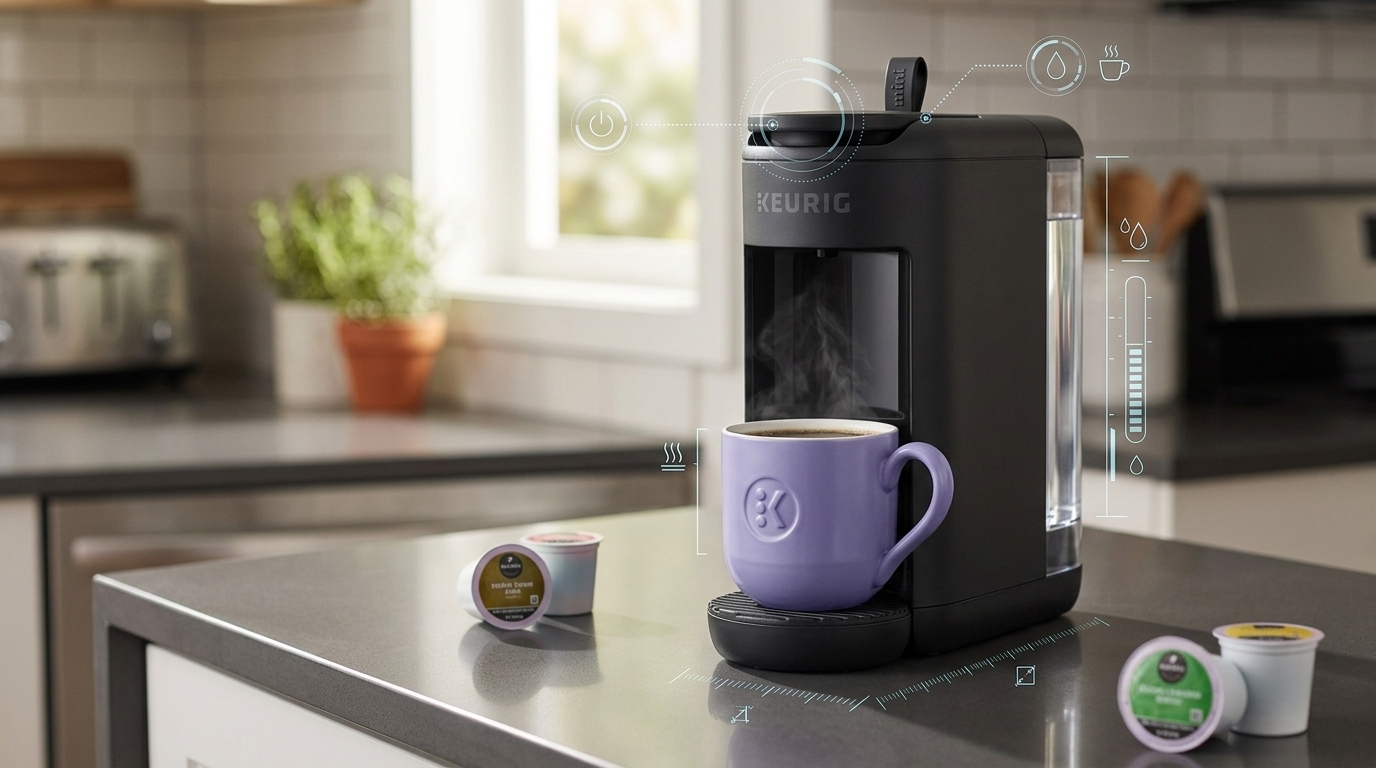
Counter space is a funny thing. You don’t notice how much you value it until a coffee maker starts competing with a toaster, a laptop, and a stack of mail for the same square foot. That tension is exactly why compact brewers have found a steady audience among students, apartment dwellers, and anyone who simply wants coffee without a full-sized appliance taking over the kitchen.
The Keurig K-Mini Mate is one of the smaller entries in the K-Cup pod brewer category. It’s designed around a simple idea: make one cup at a time, keep the footprint modest, and skip the complexity. This article walks through what the machine is built to do, where it might fit into daily life, and the practical points worth weighing before deciding whether a brewer like this suits your routine.
A quick note on approach: this is an informational overview based on the product’s published specifications and general knowledge of how single-serve pod brewers work. It isn’t a hands-on evaluation, and details can change, so the product listing is the best place to confirm current specifications.
What Is the Keurig K-Mini Mate?
The K-Mini Mate is a single-serve brewer that uses K-Cup pods, the small sealed capsules containing ground coffee, tea, hot cocoa, or other beverage mixes. You insert a pod, add water, press a button, and the machine heats and pushes water through the pod into your mug.
The “Mate” in the name signals a simplified, slimmed-down take on the K-Mini lineup. It’s listed in black, with a design aimed at small spaces and portability. The listing describes it as capable of brewing up to a 12 oz cup, which positions it for personal-sized servings rather than carafes or multi-person batches.
Key Features
Compact, Space-Conscious Design
The headline feature is size. Compact brewers of this type are typically narrow enough to tuck beside a microwave, slide onto a bookshelf, or sit on a desk without crowding anything. For a dorm room, studio apartment, or office cubicle, that slim profile can be the difference between a machine that gets used and one that gets stored in a closet.
Single-Serve Brewing
Rather than brewing a full pot, the machine makes one cup per pod. This matters more than it might seem. If you’re the only coffee drinker in your household, a drip machine often means pouring out half a pot or drinking coffee that’s been sitting on a hot plate for two hours. Single-serve brewing sidesteps that, since each cup is made fresh from a sealed pod.
Brew Size Range
The product is listed as brewing up to 12 oz. In practice, brewers in this class generally offer a few size options, so you can choose a smaller, more concentrated cup or go for a larger mug. Using a smaller setting with a standard pod tends to produce a stronger-tasting cup, while the larger setting yields a milder one. That’s a general characteristic of pod brewing rather than anything unique to this model.
Simple Controls
Machines at this level usually keep the interface minimal. Think a single button or a small number of controls rather than a touchscreen, programmable schedule, or app connectivity. For some people that simplicity is the appeal. There’s little to learn and little to go wrong.
Manual Water Fill
Instead of a large built-in reservoir, compact brewers often have you add water for each cup. That keeps the body slim, and it also means you’re always using fresh water. The trade-off is covered in the considerations section below.
Portability
The small size and relatively light build make it easy to move. People pack compact brewers for shared housing, office desks, and occasionally for vacation rentals or RVs, though it’s worth confirming power and water access wherever you plan to use it.
How It Can Be Used
A small brewer is more versatile than its size suggests. Here are a few ways people commonly put this type of machine to work.
A dorm room staple. Many dorms restrict certain appliances, such as those with open heating elements, so a pod brewer that heats water internally is often a more acceptable option. Rules vary widely between schools, so checking your residence hall’s policy first is a smart move.
A desk-side brewer. If your office has a shared pot that’s empty by 9:30 or a break room that’s a long walk away, a personal brewer can take care of the mid-morning cup without leaving your workspace.
A guest room or secondary space. Putting a small coffee station in a guest bedroom or home office is a thoughtful touch. Guests can make their own cup on their own schedule.
A backup machine. Some households keep a compact brewer on hand for days when the main coffee maker is occupied, being descaled, or simply overkill for one person.
Beyond coffee. K-Cup pods come in many varieties, including tea, hot chocolate, apple cider, and chai. If you like having a warm drink without boiling a kettle, pods offer a range of options. Some people also use the hot water function, where available through brewing without a pod, to prepare instant oatmeal or ramen, although it’s best to check the manufacturer’s guidance before using the machine in ways it wasn’t designed for.
Reusable filters. Many K-Cup compatible machines accept refillable pod filters, which let you use your own ground coffee. If that appeals to you, confirm compatibility with this specific model before purchasing an accessory.
Who It May Be Suitable For
A compact pod brewer tends to fit certain situations better than others.
- Students living in dorms or shared housing, where space and appliance rules are limiting factors.
- Solo coffee drinkers who want one fresh cup rather than a full pot.
- Small-space residents, such as people in studios, tiny homes, or apartments with minimal counter area.
- Occasional drinkers who have a cup now and then and don’t want to commit to a larger machine.
- Travelers and part-time residents who want a lightweight brewer for a second location.
- Anyone who values speed and low maintenance over customization.
Important Things to Consider
No product fits everyone, and compact pod brewers come with trade-offs worth understanding up front.
Water Capacity and Refilling
Because compact models typically don’t hold a large reservoir, you’ll likely add water before each brew. If you drink several cups in a row, or you share the machine with others, this can feel repetitive. People who want to fill once and brew for the week may prefer a model with a bigger tank.
Ongoing Pod Costs
Pods are convenient, but they’re generally priced higher per cup than buying bulk ground coffee. Over time, that difference can add up. Reusable filters can reduce the expense, though they bring a little extra prep and cleanup.
Environmental Footprint
Single-use pods create waste. Some K-Cup pods are marketed as recyclable, but recycling rules differ by location, and pods often need to be emptied and separated before they’re accepted. If sustainability matters to you, it’s worth looking into local guidelines and the options available.
Brew Size Limits
A maximum of 12 oz suits a standard mug but not a large travel tumbler. If you like to fill a 16 oz or larger vessel, you’d need to run multiple brews or look at a bigger machine.
Fewer Features
Compact brewers deliberately leave out extras like programmable timers, strength controls, temperature adjustment, or built-in milk frothers. If those features matter to you, a more fully equipped brewer may be a better match.
Maintenance
Even simple machines need some care. Mineral buildup from tap water can affect performance over time, so periodic descaling is generally recommended by manufacturers. Using filtered water and following the care instructions in the user manual can help the machine run well for longer.
Warranty and Support
Before purchasing any appliance, it’s reasonable to check the warranty terms and support options listed with the product so you know what to expect.
Comparing General Categories of Coffee Makers
Choosing a brewer is often less about the specific model and more about the type of machine that fits your habits. Here’s a general look at how a few categories differ.
Compact single-serve pod brewers emphasize convenience and small size. They’re quick, tidy, and suited to one person, though they depend on pods and typically offer fewer controls.
Full-size single-serve brewers add larger water reservoirs, more brew size options, and sometimes strength settings or temperature controls. They take more space but reduce how often you refill.
Drip coffee makers brew multiple cups at once, which suits households with several coffee drinkers. They’re economical per cup when using bulk grounds, though they’re less convenient for one person.
Pour-over and French press setups give hands-on control over flavor and use no electricity in some cases. They require more time, attention, and cleanup, so they appeal to people who enjoy the process.
Espresso machines produce a different style of beverage entirely and often come with a learning curve and a higher investment of time and money.
None of these is inherently better than the others. The right choice depends on how many cups you drink, how much space you have, how much effort you want to put in, and what kind of coffee you enjoy.
Practical Tips for Getting the Most From a Compact Brewer
A few general habits can improve results with almost any pod machine:
- Run a cleansing brew first. Before the first use, many manufacturers suggest running water through the machine without a pod. Check the manual for specifics.
- Use fresh, filtered water if possible. Water quality affects both taste and mineral buildup.
- Match brew size to the pod. Smaller sizes usually deliver bolder flavor.
- Pre-warm your mug. Rinsing a mug with hot water helps keep your drink warm longer.
- Wipe down the exterior and drip tray regularly. This keeps the machine tidy and helps prevent residue from building up.
- Descale on schedule. Follow the manufacturer’s guidance, especially if your tap water is hard.
Frequently Asked Questions
What size cup can the K-Mini Mate brew?
The product listing describes a maximum brew size of up to 12 oz. Available size options may vary, so it’s best to review the current listing or manual for the exact choices.
Does it use K-Cup pods?
Yes, it’s designed for K-Cup pods, which come in a wide range of coffee, tea, and other beverage varieties.
Is it a good fit for a small kitchen or dorm?
Its compact footprint is a major selling point for tight spaces. Dorm policies vary, so confirm what your housing rules allow before bringing any appliance.
Do I need to fill the water tank each time?
Compact brewers commonly work with a smaller water supply that you refill as needed. Check the specifications to see how much water the unit holds and how often you’d need to top it up.
Can I use my own ground coffee?
Many K-Cup compatible machines work with reusable filters, but compatibility can differ by model. Verify before buying any third-party accessory.
How often should it be descaled?
Manufacturer guidance usually suggests periodic descaling, often every few months, though hard water may call for more frequent cleaning. Your user manual will have the specifics for this model.
Can it make iced coffee?
Pod brewers can be used to make a concentrated cup that you pour over ice. Using a smaller brew size generally gives a stronger base that holds up better when diluted.
Is it suitable for travel?
The small size makes it easier to move than most countertop machines, but it still needs a power source and water, so it’s more of a “second location” appliance than a camping gadget.
Final Thoughts
The Keurig K-Mini Mate occupies a clear niche: a small, simple, single-serve brewer for people who want a fresh cup without devoting much space or attention to the process. Its strengths are its compact design and ease of use. Its limitations, including a smaller brew capacity, manual water filling, pod-related costs, and a lean feature set, are the natural trade-offs of a machine built to stay small.