Disclosure: This article contains an affiliate link to Amazon. If you follow it and make a purchase, a small commission may be earned at no extra cost to you. The information below is based on the product’s published specifications and general knowledge of pod brewers, and details should always be confirmed on the official listing.
Anyone who has shopped for a coffee machine lately knows how crowded the field is. Drip carafes, espresso machines, French presses, and pod brewers all compete for counter space, and each has a different idea of what a good morning looks like. Single-serve machines sit in a particular niche: they trade some of the ritual of manual brewing for speed, consistency, and very little cleanup.
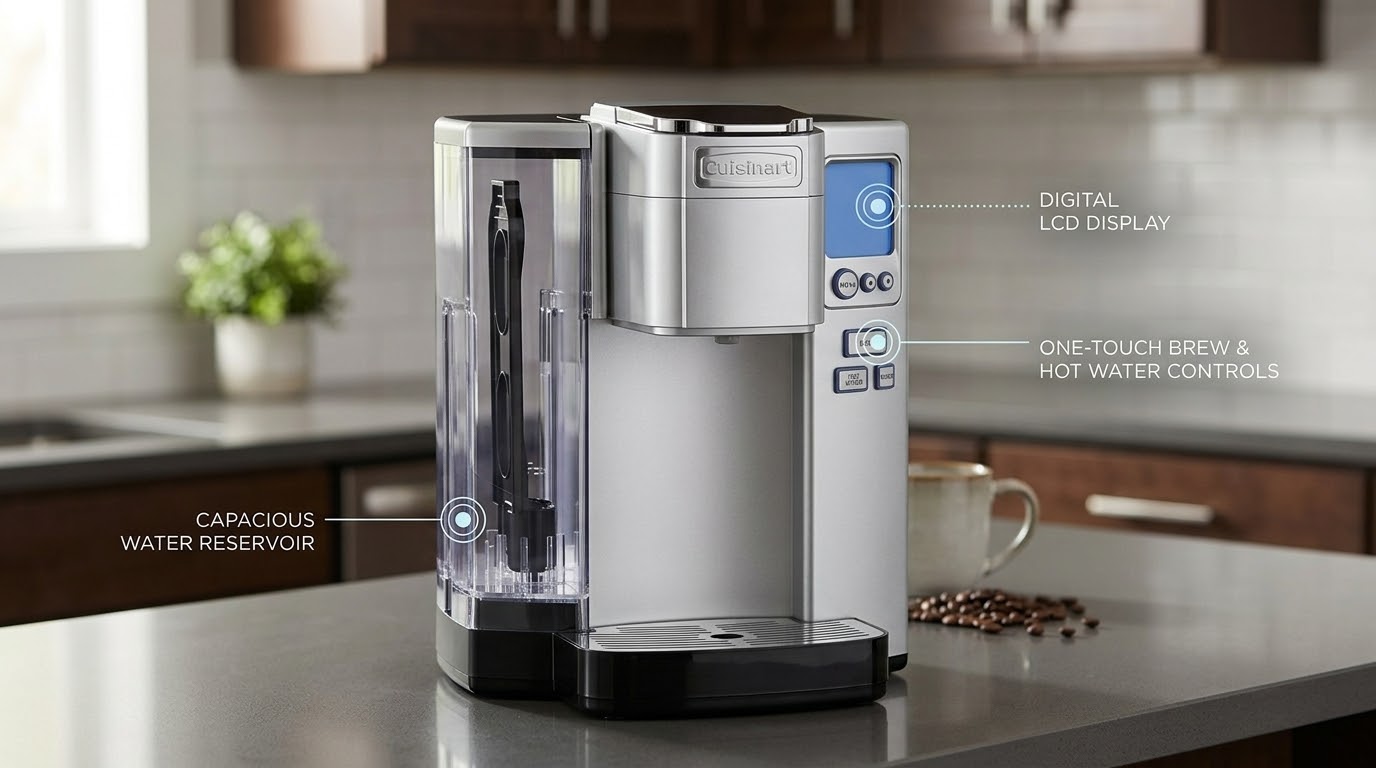
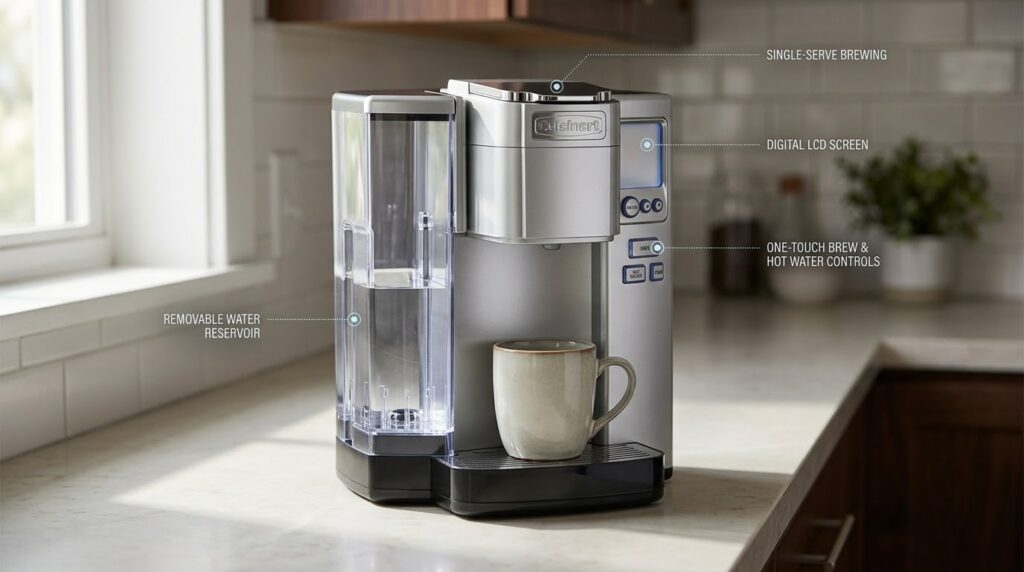
The Cuisinart Single Serve Coffee Maker, model SS-10P1, is one of the pod-style machines in that niche. It has a stainless steel finish in silver, a 72-ounce reservoir, a programmable brew function, five cup-size settings, and a hot water dispenser. This article walks through what those features mean in practice, who tends to get the most out of this type of machine, and what to think about before choosing it. It’s written as general information to help you decide, not as a verdict.
What Is a Single-Serve Pod Coffee Maker?
A single-serve brewer makes one cup at a time. You insert a sealed pod containing ground coffee, tea, or another beverage mix, choose a size, and press a button. Hot water is pushed through the pod and into your mug, and when it’s done you throw the used pod away.
The appeal is simple. There’s no measuring, no grinding, and no carafe sitting on a warming plate going stale. If two people in a household like different coffees, or if one person wants decaf in the afternoon, a single-serve machine handles that without any fuss.
The SS-10P1 follows this basic design but adds a few features that set it apart from the most minimal pod machines, particularly the larger water tank and the built-in scheduling.
Key Features of the Cuisinart SS-10P1
A 72-Ounce Reservoir
The most noticeable spec is the water capacity. At 72 ounces, the removable reservoir holds enough for a good number of cups before it needs refilling. Depending on the size you brew, that can mean most of a day’s worth of coffee for a small household, or a full week of daily single cups for one person if you’re not brewing the largest size.
Smaller reservoirs aren’t a flaw, since they suit compact kitchens and keep the water fresh. But a larger tank means fewer trips to the sink, which people tend to appreciate in a busy household or a shared workspace. Because the reservoir is removable, refilling and rinsing it is straightforward.
Five Cup-Size Settings
Rather than a single fixed pour, the machine offers five cup sizes. This matters more than it sounds. A small, concentrated cup behaves very differently from a tall, mellow one, even when the same pod is used. Choosing a smaller size generally gives a bolder taste, while larger sizes spread the same coffee across more water and produce a lighter result. The range also lets you fill anything from a small cup to a larger everyday mug without constantly adjusting.
If you tend to fill a travel tumbler on your way out the door, check the drip tray area and the clearance under the spout on the official listing, since taller vessels aren’t always a fit for every machine.
Programmable Brewing
The SS-10P1 can be programmed in advance, so the water is heated and ready when you want it. For anyone who values a predictable morning routine, being able to set a time and have the machine prepared is a practical convenience. A programmable function is less common on basic pod brewers, so it’s one of the features that distinguishes this model.
As with any scheduled appliance, it’s wise to leave a pod and a mug in place the night before if the feature is meant to brew automatically, and to confirm the exact behavior in the instruction manual.
Hot Water Dispenser
The machine also dispenses hot water on its own, without a pod. This broadens what you can do with it well beyond coffee. Hot water is useful for tea bags, instant oatmeal, instant soups, cocoa mixes, and loose-leaf steeping in an infuser. It can also be handy for rinsing a French press or warming a mug before brewing, which helps keep a drink hot longer.
Stainless Steel Styling
The silver stainless steel exterior is a matter of both looks and practicality. Metal finishes tend to blend into a wide range of kitchen styles, and they’re often easier to wipe down than textured plastic. Fingerprints can show on brushed or polished metal, so a quick wipe with a soft cloth is part of keeping it tidy.
How It Can Be Used
Most people will use the machine for a standard cup of coffee, but the feature set lends itself to more varied routines.
Morning coffee, on a schedule. Setting the programmable timer means the machine is warmed up when you walk into the kitchen, which cuts down on the wait before that first cup.
A mixed-preference household. One person can brew a dark roast in a small size while another has a mild blend in a larger mug, with no need to make a whole pot that half the household won’t drink.
Tea, cocoa, and more. Pods for tea, hot chocolate, and cider exist in many varieties, and the plain hot water function covers everything else. This is a useful setup for people who drink more tea than coffee but still want the option of both.
Iced drinks. A common approach is to brew a smaller, more concentrated cup directly over a glass of ice. Using a smaller size keeps the drink from becoming too diluted as the ice melts. Some people also brew into a heat-safe container and chill it first.
Home offices and small workspaces. A single-serve machine with a larger reservoir can suit a small office, a guest room, or a break area where several people take turns making a cup.
Guests. Having a few varieties of pods on hand means you can offer a choice of regular, decaf, or tea quickly when visitors drop by.
Who It May Be Suitable For
No appliance fits everyone, and a pod brewer particularly depends on your habits. This type of machine may be a reasonable match for:
- People who drink one or two cups a day and prefer not to brew a full pot.
- Households where tastes differ and variety matters.
- Busy mornings where speed and minimal cleanup are the priority.
- Those who want both coffee and hot water for tea or instant foods from one appliance.
- Small kitchens, dorm-style spaces, or offices where a compact, self-contained brewer is more practical than a larger setup.
- Anyone who likes the idea of a pre-set brew time without moving up to a more complex machine.
It may be less well suited to those who regularly serve four or more people at once, since single-serve brewing means making each cup in turn, or to people who enjoy the hands-on process of grinding fresh beans and dialing in a recipe.
Important Things to Consider
A balanced look at any product includes the trade-offs, and pod machines have a few worth knowing about.
Pod compatibility. Before buying, confirm which pod formats the machine accepts and whether a reusable filter cup is included or sold separately. Pod systems vary, and the listing and manual are the right places to check. If you’d like to use your own ground coffee, a reusable filter option is the usual route.
Ongoing cost and waste. Pods generally cost more per cup than buying whole beans or ground coffee in bulk, and most single-use pods create more packaging waste. Some brands offer recyclable or compostable pods, and a reusable filter can reduce waste, so it’s worth looking into what fits your values and budget.
Taste expectations. Pod coffee is convenient and consistent, but it won’t replicate the character of a freshly ground pour-over or an espresso machine. If flavor nuance is your top priority, you may find a pod brewer is better as a convenient everyday option than as your only way of making coffee.
Water quality and maintenance. Using filtered water can improve taste and slow mineral buildup. Like any machine that heats water, it will eventually need descaling, and the reservoir should be rinsed periodically. The manufacturer’s care instructions will outline how often and with what.
Size and placement. A large reservoir usually means a larger footprint. Measure the space under your cabinets, since you’ll need clearance to lift off and refill the tank, and check the weight of the filled reservoir if you’ll be carrying it often.
Noise and warm-up time. Heating elements and pumps make some noise, and any machine takes a moment to heat. These details are rarely deal-breakers but are worth knowing if you’re sensitive to early-morning sounds.
Warranty and support. Look at the warranty terms listed for the product and who is selling it, so you know what to expect if something goes wrong.
How Single-Serve Machines Compare With Other Coffee Categories
Rather than ranking specific models, it helps to see where different types of brewers tend to fit.
Traditional drip coffee makers brew a full carafe at once. They’re cost-efficient per cup and well suited to groups, but coffee left on a warming plate can lose freshness, and brewing one cup is awkward.
Espresso machines offer concentrated shots, milk steaming, and a lot of room for skill and experimentation. They typically need more space, more learning, and more cleaning.
Manual methods like pour-over, French press, and AeroPress give you control over every variable and tend to be inexpensive to start. They also take more time and attention each morning.
Single-serve pod machines sit at the convenience end of the spectrum: fast, tidy, and flexible across drink types, with the trade-offs in per-cup cost and packaging noted above.
Combination or dual-function machines pair a carafe with a pod brewer, which can be a good fit if you sometimes host a crowd and sometimes drink alone. A pod-only machine like this one keeps things simpler and more compact.
Each category answers a different need, and plenty of households keep two types for different situations.
Frequently Asked Questions
How many cups can the 72-ounce reservoir make?
It depends on the cup size you choose. Smaller settings use less water, so the tank lasts through more cups, while the largest setting uses more per brew. Divide 72 ounces by your usual cup size for a rough estimate.
Can it make hot water for tea or instant foods?
Yes, a hot water function is part of the listed features, which makes it useful for tea, instant oatmeal, soups, and similar items.
Can I program it ahead of time?
The machine is described as programmable. The manual covers the exact steps for setting a brew time.
Does it work with reusable filters or my own ground coffee?
This depends on what’s included and what’s compatible. Check the product listing for the accessories that come in the box, and look at compatible reusable filter options if you want to use your own grounds.
How often does it need cleaning?
Regular rinsing of the reservoir and drip tray is a good habit, and periodic descaling helps if you have hard water. Follow the manufacturer’s recommendations for timing and the approved descaling solution.
Is it suitable for brewing iced coffee?
Many people use a smaller cup size and brew over ice for a stronger result that stands up to dilution. Experiment with sizes to find what suits your taste.
Will it fit under my kitchen cabinets?
Confirm the exact dimensions on the listing and measure your space, paying particular attention to the height needed to remove the reservoir.
Final Thoughts
The Cuisinart SS-10P1 is a pod-based brewer built around convenience: a large reservoir, five cup sizes, a programmable function, and a hot water option that stretches its usefulness beyond a daily cup of coffee. Whether it makes sense for you depends on how you drink coffee, how many people you’re serving, and how you feel about the cost and packaging of pods compared with other brewing methods.
If your mornings are short and your preferences vary, a machine like this is worth a close look. If you value hands-on brewing or regularly serve large groups, another category may suit you better. Either way, comparing the specifications, accessories, and warranty details before deciding will serve you well.