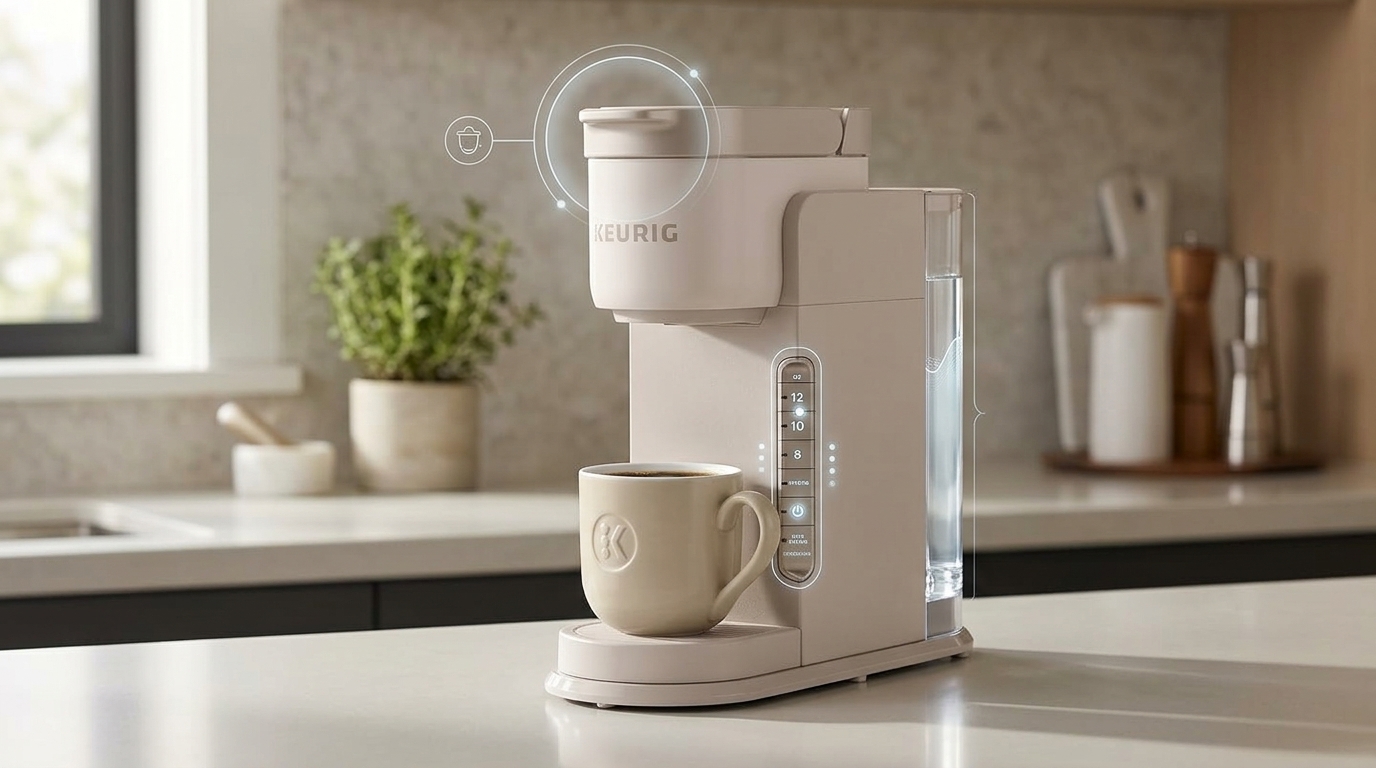
Mornings tend to be the least forgiving part of the day. Alarms go off, schedules start stacking up, and the idea of grinding beans, rinsing a carafe, and waiting on a slow drip can feel like a lot before you’ve had anything to drink. That’s one reason single-serve pod brewers have stayed popular in homes, dorm rooms, small offices, and guest suites. They shrink the coffee routine down to a few simple steps.
The Keurig K-Express Single Serve K-Cup Pod Coffee Maker in Warm Stone is one of the more compact entries in that category. It offers three brew sizes, a 42-ounce removable water reservoir, a Strong Brew button, and a design that accommodates travel mugs. This guide covers how those features work in practice, who the machine suits, where it has limits, and how it compares with other ways of making coffee at home. It’s written as an informational overview, not a verdict, so you can decide whether it fits the way you actually drink coffee.
What Is the Keurig K-Express?
The K-Express belongs to Keurig’s lineup of pod-based brewers, which are built around K-Cup pods: small sealed cups holding pre-measured ground coffee, tea, cocoa, or other beverage mixes. You place a pod in the machine, choose a size, and the brewer pushes heated water through it into your cup.
Within the broader Keurig family, the K-Express sits toward the straightforward end of the spectrum. It has no touchscreen, no Wi-Fi connectivity, and no long menu of settings. It focuses on the essentials: a manageable footprint, a few brew-size choices, a stronger-brew option, and a water tank large enough that you aren’t refilling it every time someone wants a cup.
The Warm Stone finish is a soft, neutral shade that tends to blend into a range of kitchen palettes, from white cabinetry to butcher block to darker laminate. It’s a small detail, but appearance matters when an appliance lives on your counter every day.
Key Features Explained
Spec lists can feel abstract, so here is what each feature means in day-to-day use.
Three Brew Sizes
The K-Express offers three cup-size options, generally in the range of 6, 8, and 10 ounces (exact sizes are worth confirming on the current product listing, since specifications can be updated). That covers most mug sizes people reach for at home.
A smaller brew is usually the better match for a pod when you want something concentrated and rich, such as a small morning cup or an afternoon pick-me-up. The larger setting suits a standard mug, though pushing the same amount of coffee through the pod over more water naturally produces a lighter result. Choosing a size is partly about volume and partly about taste. Many people find that the smaller settings give a bolder cup.
Strong Brew Button
The Strong Brew feature is designed to make a more robust cup without changing the pod. In general, this type of setting slows or adjusts how water passes through the grounds, increasing contact time and extracting more of the coffee’s character.
It helps to keep expectations realistic. A strong-brew setting changes intensity, not the fundamental nature of the coffee. A light roast will still taste like a light roast; the button simply tries to pull more from it. If you often find pod coffee a bit mild, it’s an easy option to experiment with. Using the smaller brew sizes alongside it can push the result further toward boldness.
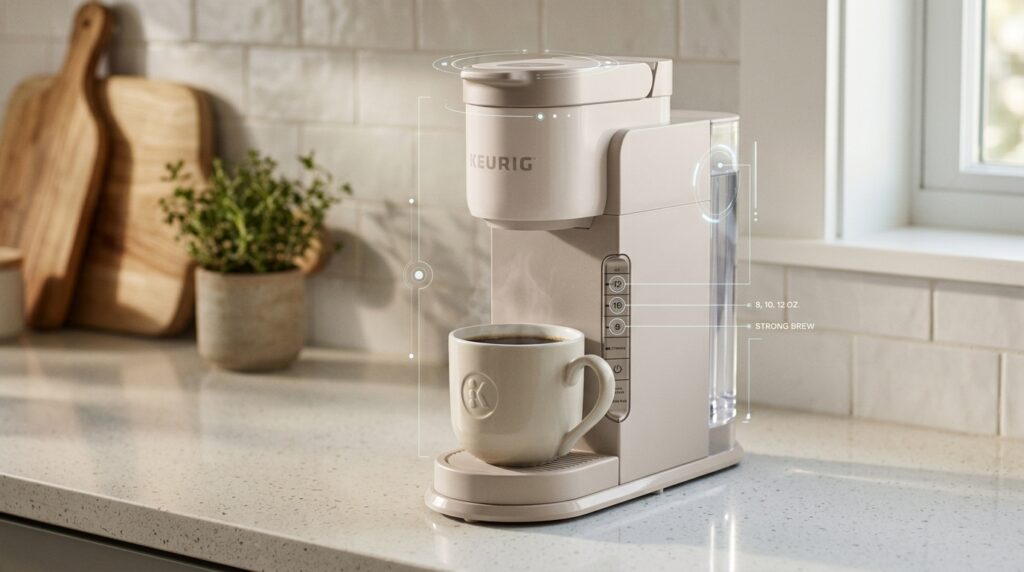
42-Ounce Removable Reservoir
Water capacity is one of those features you don’t think about until it’s inconvenient. A 42-ounce reservoir holds enough water for multiple cups before needing a top-up. For a single person, that could mean several days between refills, depending on how much coffee you drink. For a household with two or three coffee drinkers, it reduces the number of mid-morning interruptions.
The removable design is the more practical half of the equation. You can carry the tank to the sink, fill it under the tap, rinse it out, and set it back without sliding the entire machine around or pouring water awkwardly from a pitcher. It also makes regular cleaning easier, which matters because water tanks are one of the places where residue and film can build up over time.
Travel Mug Friendly Design
Anyone who has tried to brew into a tall insulated tumbler knows the frustration of a machine whose spout sits too low. The K-Express is described as travel mug friendly, which typically means the drip tray is removable or adjustable to create extra vertical clearance.
In practice, that means you can brew directly into a commuter mug, set the lid on, and head out the door. It saves a step, and it means fewer dishes, since you aren’t brewing into a cup only to transfer the coffee into something portable. It’s worth measuring your favorite tumbler against the machine’s clearance, since mug heights vary widely.
Compact Footprint
Counter space is a limited resource, especially in apartments, dorms, and smaller kitchens. The K-Express is built to be space-conscious. It won’t vanish into the background the way a tiny travel brewer might, but it’s not as bulky as a full-size carafe machine paired with a grinder and storage containers. If you want to confirm it will fit under a cabinet or in a particular nook, check the listed dimensions before assuming.
How It Can Be Used
A coffee maker doesn’t have to be used only for coffee. Because the machine heats and dispenses hot water through a pod, it supports a surprisingly wide range of drinks.
Everyday Coffee
The obvious use is the straightforward one. Pick a pod, choose a size, and brew. K-Cup pods come in many roast levels, from light to dark, plus flavored and decaf options. This variety lets one machine serve households with mixed preferences without anyone having to brew a full pot that half the house won’t drink.
Tea, Cocoa, and Other Hot Drinks
Tea pods, hot chocolate pods, and chai or cider mixes are widely available in K-Cup format. This makes the machine useful for non-coffee drinkers and for evenings when caffeine isn’t the goal. Anyone who wants hot water for instant oatmeal, instant soup, or a cup of loose tea steeped in a mug can also run a brew cycle without a pod, though it’s wise to check the manufacturer’s guidance on doing so and to run a cleansing brew afterward if you’ve used the machine for anything other than water.
Iced Coffee at Home
Iced coffee is a popular use for pod brewers, and the technique is simple. Brew a small, strong cup directly over a glass filled with ice, and the concentration helps offset the dilution from melting. The Strong Brew option and the smallest brew size work well together for this purpose. Some people prefer to brew first, let it cool for a few minutes, then pour over ice to reduce how much the ice melts at once.
Guest Rooms and Shared Spaces
A pod brewer in a guest room or a shared break area has an obvious advantage: people can make a single cup without needing to know how to operate a more involved machine. The interface is minimal enough that visitors can figure it out without a tutorial.
Dorms, Offices, and Small Apartments
Because each cup is brewed independently, there’s no leftover pot sitting on a warming plate, no carafe to wash, and no need to commit to brewing eight cups when you want one. For students and remote workers, this is often the deciding factor.
Travel and Commuting
The travel mug compatibility means you can fill a tumbler at home and take it with you. This is particularly handy for early commutes or school drop-offs, when pouring from a carafe into a thermos would eat up valuable minutes.
Who It May Be Suitable For
No appliance fits everyone, and understanding the kinds of households where a pod brewer makes sense is more useful than a blanket recommendation.
People who value speed and simplicity. If your priority is a reasonably good cup with minimal effort, a pod brewer aligns well with that. There’s no measuring, grinding, or filter folding.
Single-drinker households. When only one person drinks coffee, a full-size drip machine often means wasted coffee or a stale half-pot. Single-serve brewing eliminates that.
Mixed-preference households. One person likes dark roast, another prefers decaf, and a third wants tea. A pod system accommodates all three without compromise.
Small-space dwellers. Apartment renters, students, and anyone with a tight kitchen may appreciate a compact machine that doesn’t demand much room.
Commuters. If you take your coffee on the road, the travel mug clearance is genuinely useful.
Occasional coffee drinkers. Someone who has a cup a couple of times a week may not want to invest in a grinder, a gooseneck kettle, and a stack of specialty equipment. A pod machine keeps the entry point low.
Gift-givers or people furnishing a first home. Coffee makers are common housewarming and graduation gifts, and a straightforward, no-fuss model tends to suit recipients who haven’t yet settled on strong preferences.
Important Things to Consider
A fair look at any appliance includes its tradeoffs. Here are the points worth thinking through before deciding.
Cost Per Cup Over Time
Pod-based coffee generally costs more per cup than brewing from a bag of ground or whole-bean coffee. The convenience comes at a premium. Whether that tradeoff makes sense depends on how often you brew and how much you value the time saved. It’s worth estimating your own weekly usage and comparing it against your current coffee spending.
Environmental Footprint
Single-use pods create waste. Keurig has stated goals around recyclability for its pods, and recycling programs vary by location, so the actual outcome depends on local infrastructure and whether you follow the prep steps (such as peeling the lid and emptying the grounds). For those who want to reduce waste, reusable filter baskets designed for Keurig machines exist, letting you use your own ground coffee. Compatibility can vary by model, so check the specifics before purchasing one. Reusable filters also change the convenience equation, since you’re back to measuring and cleaning grounds.
Flavor Ceiling
Pod coffee can be perfectly pleasant, but it operates within limits. Pre-ground coffee sealed in a pod won’t match freshly ground beans brewed with careful technique. For people who care deeply about origin, roast date, or extraction nuances, a pod brewer will feel restrictive. For people who want a reliable, consistent cup without ceremony, that ceiling may never matter.
Brew Size Limitations
A maximum brew size in the neighborhood of 10 ounces means this isn’t a machine for filling a large carafe. If you regularly serve a crowd or like a very large mug, you’d need to brew multiple times. The three-size range is also less flexible than machines offering a broader spread of sizes.
Maintenance Requirements
Like any machine that heats water, the K-Express benefits from regular upkeep. Mineral buildup (scale) can accumulate over time, especially in areas with hard water, and may affect performance or taste. Descaling every few months is commonly recommended for pod brewers, and the removable reservoir should be washed periodically. The needle that punctures the pod can also collect grounds and may need occasional cleaning. Always follow the manufacturer’s instructions, which are the authoritative source for maintenance steps.
Water Quality
Coffee is mostly water, so the water you use matters. Filtered or softer water often produces a cleaner taste and can reduce scale. If your tap water has a strong flavor, you may notice it in the cup.
Features It Doesn’t Have
The K-Express keeps things simple, which means it skips conveniences found on higher-end models: programmable scheduling, a temperature adjustment dial, a larger color display, and similar extras. If those matter to you, it’s better to know up front than to discover their absence later. Verify the current feature list on the product page, since specifications can change between production runs.
Noise and Speed
Pod brewers make some noise as they pump and heat water, and brew times differ from model to model. If you’re sensitive to kitchen noise early in the morning, it’s worth reading specifications and user-submitted details on the listing page to set expectations.
How Single-Serve Compares with Other Brewing Categories
Rather than pitting specific brands against each other, it’s more useful to compare broad approaches to making coffee at home. Each has strengths, and the right choice often depends on lifestyle more than quality.
Single-Serve Pod Brewers
These excel at convenience, speed, and variety. They suit people who want one cup at a time with minimal cleanup. The tradeoffs are higher per-cup cost, pod waste, and less control over the brewing process.
Traditional Drip Coffee Makers
A standard drip machine brews multiple cups at once, making it a natural fit for households where several people drink coffee at the same time. Per-cup cost is typically lower, since you’re buying bulk ground coffee. The downsides are that a half-pot can go stale, the carafe needs washing, and the machine commits you to a larger batch.
Pour-Over and Manual Methods
Pour-over cones, French presses, and similar manual tools give you hands-on control over variables like water temperature, pour rate, and steep time. Many coffee enthusiasts enjoy the ritual and the flavor clarity. They also demand more time, attention, and usually a separate grinder and kettle. They suit people who see coffee-making as a hobby, not a means to an end.
Espresso Machines
Espresso setups, from entry-level machines to semi-automatic ones, produce concentrated shots that serve as the base for lattes, cappuccinos, and Americanos. They offer a different beverage altogether rather than a stronger cup of brewed coffee. They also involve a steeper learning curve, higher maintenance, and usually more counter space.
Capsule and Pod Espresso Systems
A separate group of pod-based machines focuses on espresso-style drinks rather than standard brewed coffee. These aim to simplify espresso in the same way K-Cup brewers simplify drip coffee. The beverage style differs, so it comes down to whether you prefer a mug of brewed coffee or a smaller, more concentrated drink.
Cold Brew Systems
Cold brew makers steep coffee grounds in cold water for many hours, producing a smooth, low-acid concentrate. This requires planning ahead rather than on-demand brewing, but it works well for people who drink iced coffee regularly and want to prepare it in batches.
The best category is simply the one that matches your habits. Some households keep two methods: a pod brewer for weekday rushes and a manual method for slow weekend mornings.
Practical Tips for Getting More from a Pod Brewer
A few small habits can make a noticeable difference in results, regardless of which pod machine you use.
Run a water-only cycle first. Brewing a cup of plain hot water before your first pod of the day helps warm the internal components and may improve the temperature of the first cup.
Match the size to the pod. Most pods are designed with a recommended brew size on the package. Brewing a pod at a larger size than recommended tends to produce a thin, watery result.
Try a smaller size with Strong Brew. If you like a bolder cup, this combination is a straightforward starting point.
Store pods properly. Keep them in a cool, dry place away from direct sunlight. A drawer or cabinet works better than a countertop spot next to the stove.
Clean the drip tray. Spills and drips collect there, and a quick rinse prevents odors and residue.
Keep a descaling schedule. Setting a reminder every few months saves you from forgetting until performance noticeably drops.
Experiment with variety. Many pod brands offer sampler packs, which let you explore roast levels and flavors before committing to a larger box.
Frequently Asked Questions
What kind of pods does the K-Express use?
It’s designed for K-Cup pods, the standard single-serve format used by Keurig brewers. These are sold in a wide range of coffee, tea, and specialty beverage options from many brands.
Can I use my own ground coffee?
Many Keurig machines work with reusable filter baskets that let you add your own grounds. Compatibility depends on the specific filter and brewer, so check the filter manufacturer’s listing to confirm it fits the K-Express before purchasing.
How many cup sizes does it offer?
It has three brew size options. Verify the exact ounce amounts on the current product details, as listings can be updated.
What does the Strong Brew button do?
It adjusts the brewing process to produce a more intense cup. It doesn’t change the type of coffee, but it may help if you find standard settings too mild.
Is the water reservoir easy to remove and refill?
The reservoir is removable and holds 42 ounces, so you can take it to the sink rather than pouring water into the machine. That also makes cleaning more straightforward.
Will it fit a travel mug?
The design is described as travel mug friendly, with space created by adjusting or removing the drip tray. Because mug heights vary, measuring your tumbler against the machine’s clearance is a smart step if you have a particularly tall one.
Can I make tea or hot chocolate with it?
Yes, tea, cocoa, and similar beverage pods are available in K-Cup format. You can also run a water-only brew to get hot water for other uses, following the manufacturer’s guidance.
How often should I descale it?
Manufacturers often suggest descaling every few months, and more often if your water is hard. The user manual provides the recommended procedure and schedule for this specific model.
Are used pods recyclable?
It depends on your local recycling program and how the pod is prepared. Generally, the foil lid must be removed and the grounds emptied before the plastic cup can be recycled, where accepted. Check your municipality’s rules, since acceptance varies.
Is it suitable for a large household?
It can serve one cup at a time reliably, but if many people want coffee at once, the single-serve format means waiting for each brew. Larger households sometimes pair a pod machine with a carafe-style brewer to cover both situations.
Does it brew iced coffee?
It can be used as part of an iced coffee routine. A common approach is to brew a smaller, stronger cup over a glass of ice, or to brew and let it cool slightly before pouring over ice.
What should I do if the coffee tastes weak?
Try a smaller brew size, use the Strong Brew option, switch to a bolder roast, or make sure the pod is being used at the size recommended on its packaging. Also check whether the machine needs descaling, since buildup can influence performance.
Final Thoughts
The Keurig K-Express fits a particular niche: people who want a simple, space-conscious way to make a single cup without much fuss. Its three brew sizes, Strong Brew option, large removable reservoir, and travel mug clearance cover the basics that matter in daily use, while leaving out the extras found on pricier models.
Whether it suits you comes down to how you drink coffee. If your mornings are rushed, your household’s tastes vary, or you simply don’t want to manage a full pot, a pod brewer can remove friction from the routine. If you value fine control over extraction, prefer buying beans in bulk, or want to minimize single-use packaging, other methods may align better with your priorities, and nothing says you can’t keep more than one approach on hand.